Radon can enter a house from the ground beneath the building. For this reason, many homes require a solution to reduce the amount of radon in the indoor air. People often choose between two methods: a passive or an active radon reduction system.
Both systems have the same aim: to reduce radon levels in the home. The main difference lies in how the system works. In this guide, we’ll go through what the different systems involve, how they work and what you should consider before choosing a mitigation solution.
Passive radon mitigation system
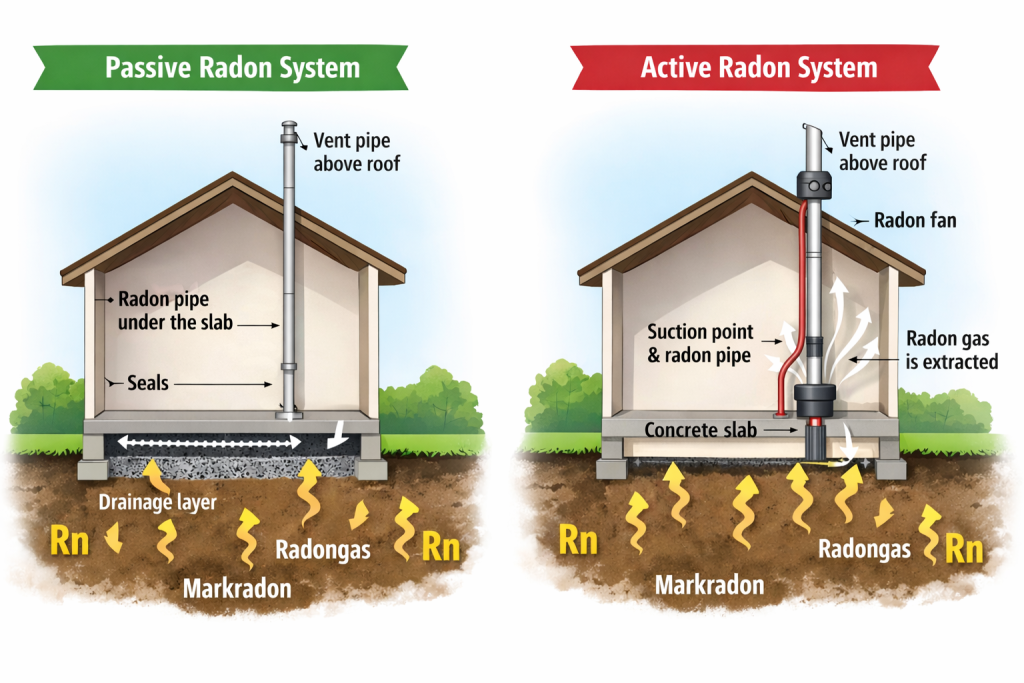
Passive radon mitigation reduces radon levels without the use of a fan. Instead, the system relies on the house being properly constructed and on there is a way for the radon gas to escape from the building.
A passive system often consists of
• layer beneath the house that allows air to pass through
• pipes that carry the gas away from the ground
• sealing around cracks and penetrations
• channel that carries the air up over the roof
The system uses natural air flows and pressure differences to remove radon. As a result, it normally requires neither a fan nor much maintenance.
For this reason, it is common to choose a passive system for construction of new buildings. This means that the house can be designed with this in mind from the beginning. It will make it easier to manage if radon levels would arise later on.
What is an active radon mitigation system?
Active radon mitigation involves using a fan to extract radon from the ground beneath the house. The fan creates a negative pressure that draws the radon gas out before it has a chance to seep into the home.
An active system often consists of:
• suction point or pipe under the floor slab or in the ground
• pipe system that carries the gas away
• Installation of a fan that drives the air flow
• an outlet above the roof level for transporting out the radon gas
The active system usually provides a stronger and more consistent result than a passive system. Therefore, it is often a better choice when testing have already indicated high radon levels
Differences between active and passive systems
The main difference is that a passive system operates without a fan, but an active system uses a fan to make it more effective.
Here are some of the key differences:
1. How the system works
A passive system uses natural air flow. An active system uses mechanical assistance to remove radon.
2. How effective the system is
A passive system can work well as a preventive solution. An active system is usually more effective when radon levels are already too high.
3. When each system is most suitable
A passive system is often best suited to new-build houses. An active system is often best suited to existing houses with confirmed radon problems.
4. Operation and maintenance
A passive system has few movable parts and requires little oversight. An active system requires electricity and needs regular checks to ensure the fan is working.
When to choose a passive vs active system?
A passive radon system is often the best choice for new homes because it helps prevent radon problems from the start. Installed during construction, this type of radon mitigation system can reduce the risk of radon entering the home from the ground.
An active radon system is usually the better option when high radon levels have already been detected or when a passive radon system does not provide enough protection. For homes with soil radon problems, an active radon system offers more effective radon reduction and better long-term control. Choosing the right radon mitigation system depends on whether the goal is prevention in a new home or reducing elevated radon levels in an existing property.
Is it possible to upgrade a passive system to an active one?
In many cases it is possible to upgrade a passive system to an active one. This involves installing a fan in the existing system to increase the air flow and improve its effectiveness.
This is a major advantage. It means you can start with a simpler solution and upgrade it later if radon measurements indicate that it is necessary.
Things to Consider Before Choosing a Solution
You shouldn’t take any chances when choosing a radon mitigation solution. Instead, start by understanding the specific problem in your house and tailor your solution to your individual circumstances.
Here are some important things to bear in mind:
1. Start by testing radon levels
You need to know whether your home actually has high radon levels. The test will also show how serious the problem is.
Read more about how to test for radon here
2. Find out where the radon comes from
Radon can arise from the ground, certain building materials or, in some cases, from water. Active and passive ventilation systems are most effective when the radon comes from the ground
3. Examine the construction of the house
Houses with basements, ground-level slabs or other foundation types may require different types of actions. The solution must therefore be tailored to the building.
4. Consider maintenance and long-term functionality An active mitigation system requires electricity and some oversight over time. A passive mitigation system requires less maintenance but does not always provide the same level of efficiency.
Advantages and disadvantages
Passive system: the main advantage is the simplicity, low energy consumption and its suitability for new-build homes. It also requires little maintenance.
The downsides are the system is not always effective enough. As a result, it may be necessary to install a fan for additional ventilation at a later stage.
Active system: The advantages is that an active system often provides better and more consistent radon reduction. It works well when radon levels are already high.
The main drawbacks are the system requires electricity and a fan, and it also needs some maintenance. It may also involve higher maintenance costs than a passive system.
How do I know which one to choose?
It depends on the specific conditions of the house and the results of the radon test.
It is often a good idea to think along these lines:
• Are you building a new home and want to prevent radon? In that case, a passive system is often a good place to start.
• Have you already detected high radon levels? In that case, you will often need an active system.
•Do you want to start with a ready-made solution? In that case, a passive system can be a smart choice, especially if it can be upgraded later.
The most important thing is to choose a solution that suits the house, not just one that seems simple or cheap.
A well-functioning system can often reduce radon levels by over 90%.
Frequently asked questions about active and passive radon systems
What is the difference between an active and a passive radon mitigation system?
A passive system operates without a fan. An active system uses a fan to remove radon more effectively.
Which system is best?
It depends on the building’s construction, the source of the radon and the measured radon levels.
Is a passive radon system sufficient in a new-build house?
It is often a good starting point in a new-build house, but it is not guaranteed
to keep radon levels below safety standards. its effectiveness is dependent on the building design and the radon levels in the soil.
Do you still need to measure radon levels even if the house has a radon mitigation system?
Yes. The test shows whether the system is actually working as it should.
How much does an active or passive radon system cost?
The cost of radon mitigation systems varies significantly, the active is more expensive.
Passive Radon System Cost Installation: $300 to $1,500.
Active Radon System Cost Installation: $1,200 to $2,800+.

